Sunday, November 27, 2005

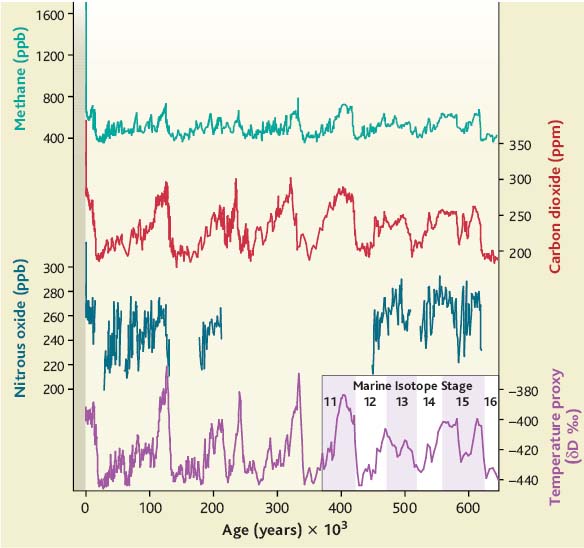
Carbon dioxide level highest in 650,000 years


Refs: Spahni, R., J. Chappellaz, T.F. Stocker, L. Loulergue, G. Hausammann, K. Kawamura, J. Flückiger, J. Schwander, D. Raynaud, V. Masson-Delmotte, J. Jouzel, Atmospheric methane and nitrous oxide of the late Pleistocene from Antarctic ice cores, 310, Science, 1317-1321, 2005.
http://spot.colorado.edu/~flueckig/publications.html

Siegenthaler, U. T.F. Stocker, E. Monnin, D. Lüthi, J. Schwander, B. Stauffer, D. Raynaud, J.-M. Barnola, H. Fischer, V. Masson-Delmotte, J. Jouzel, 2005, Stable carbon cycle-climate relationship during the late Pleistocene. Science 310, 1313-1317.
http://www.climate.unibe.ch/~stocker/publications.html

Saturday, November 05, 2005

MRSA And Bad Reporting

The latest saga of the dodgy MRSA lab is available from bad science:

Microbiologists raising doubts? It must be a cover-up

This story really does illustrate how dishonest tabloid reporting is here in the UK (guilty papers: Sun, Mirror, Mail, Evening Standard and more) Reporters seem to think it is OK to essentially fabricate evidence of MRSA contamination and then sling allegations of a 'cover-up' around when their dishonesty is exposed.

Other posts on this story:
After feeding the scare he’ll sell you the solution
The man behind the Mop of Death
Lab that finds bugs where others do not


New Brain Atlas

I have just found this site via neurodudes and it looks pretty neat:

"BrainMaps.org is an interactive high-resolution digital brain atlas and virtual microscope that is based on scanned images of serial sections of both primate and non-primate brains and that is fully integrated with a high-speed database server for querying and retrieving data about brain structure and function over the internet"

http://brainmaps.org/index.php

It is still in development so it should get even better in the future!

If you like brains, see also: The Brain Museum

New Dmanisi paper

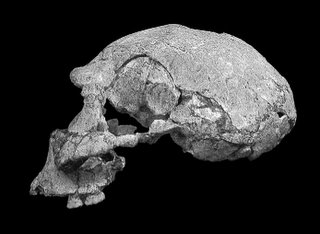
Dmanisi Skull D2282

Dmanisi in Georgia is a very important site in the understanding of human evolution so it is nice to see that a new paper on these finds is soon to be published in the journal of human evolution. The bones in this site are very well preserved so reveal alot of information about our ancestors. Dmanisi hominins are probably some of the earliest human ancestors to venture out of Africa - possibly due to greater intelligence enabling exploitation of new environments.

To get to Georgia the Dmanisi hominins must have travelled through Turkey - i wonder if there are more fossils of this age still to be found in this part of the world?

Anatomical descriptions, comparative studies and evolutionarysignificance of the hominin skulls from Dmanisi, Republic of Georgia

Philip Rightmire, David Lordkipanidze, Abesalom Vekua

Journal of human evolution - in press

Abstract: Evidence for ancient hominin occupation in Eurasia comes from Dmanisi in the Georgian Caucasus. Stratigraphic and sedimentological arguments,geochemical observations, paleomagnetic sampling and radiometric dates all point to the conclusion that bones and artifacts were depositedat this site during a brief interval following the close of the Olduvai Subchron (1.77 million years ago). In this report we presentfurther descriptive and comparative studies of the D2280 braincase, the D2282 partial cranium, now linked with the D211 mandible, and theskull D2700/D2735. The crania have capacities ranging from 600 cm3 to 775 cm3. Supraorbital tori and other vault superstructures are onlymoderately developed. The braincase is expanded laterally in the mastoid region, but the occiput is rounded. The pattern of sagittal keelingis distinctive. D2700 displays a prominent midfacial profile and has a very short nasoalveolar clivus. Also, the M3 crowns are reduced insize. Although there is variation probably related to growth status and sex dimorphism, it is appropriate to group the Dmanisi hominins together.With the possible exception of the large D2600 mandible, the individuals are sampled from one paleodeme. This population resembles Homohabilis in brain volume and some aspects of craniofacial morphology, but many of these features can be interpreted as symplesiomorphies. Otherdiscrete characters and measurements suggest that the Dmanisi skulls are best placed with H. erectus. There are numerous similarities to individualsfrom the Turkana Basin in Kenya, but a few features link Dmanisi to Sangiran in Java. Some traits expressed in the Dmanisi assemblageappear to be unique. Reconstructing the evolutionary relationships of these ancient populations of Africa and Eurasia is difficult, as the record isquite patchy, and determination of character polarities is not straightforward. Nevertheless, the evidence from anatomical analysis and measurementssupports the hypothesis that Dmanisi is close to the stem from which H. erectus evolved.

Some nice pictures of the excavation in progress and people involved: http://www.fas.harvard.edu/~skeleton/pontzerDmanisi.htm
Monday, October 31, 2005

3D scanning of prehistoric art


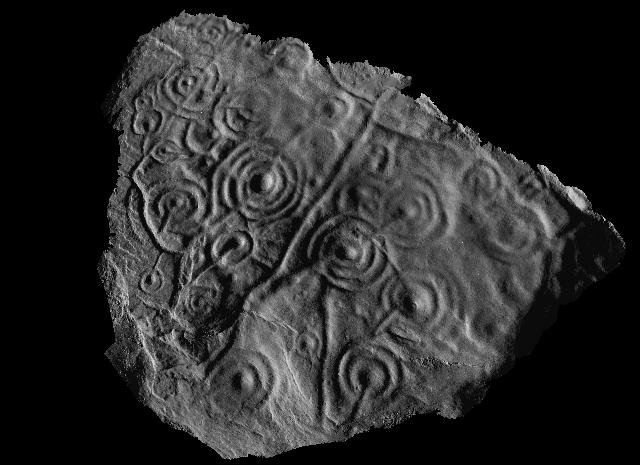
Archaeoptics has just relased the news that they have finished scanning several rock art panels: Ketley Crag, Chatton Park 1, Huntersheugh Howgill and Cotherstone. This is good news as laser scanning is the most accurate and non destructive way of recording rock art and so will provide an excellent record of these carvings many of which are threatened in many different ways.

Link

Beckensall Archive of Northumberland Rock Art

I have also come across a nice article on the scanning of the art at Long Meg: http://www.ucl.ac.uk/prehistoric/past/past50.html#LASERSCANNING

See also: Dr. Margarita Díaz-Andreu

Sunday, October 30, 2005

Brush up on your Yucatec

I was interested to learn that Mel Gibson's new film Apocalypto will be performed in the maya language Yucatec. This has to be a first but it is a good idea as Mayan history contains some brilliant stories, impressive spectacle and loads of violence. In case you wanted to learn more about this language here are some resources:

A Brief Introduction to Yucatec Maya

Combined Dictionary–Concordance of the Yucatecan Mayan Language

an online dictionary of all Mayan languages

Story about the film

Eastern Zhou grave discovered


The eastern zhou (770-256 BC) has produced some absolutely amazing relics so it’s nice to learn that a new tomb from that era has been discovered near Luoyang and properly excavated rather than being looted.

Link

Saving China's antiquities

Monday, October 24, 2005

New Rock Art

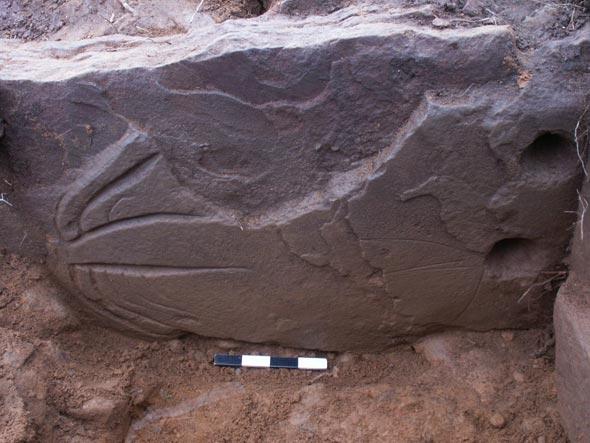
I do love megalithtic art so i was very excited to hear about the discovery of a new decorated tomb in Scotland. The find was at Balblair Quarry, Beauly near Inverness an area that does not contain any similar art. It looks like the sort of thing that is found in Ireland and areas influenced by Ireland so the discovery on the east coast is an enigma. More information on the excavation and further pictures can be found here.

Saturday, October 22, 2005

Palanth up again

The palanth forum where various aspects of human evolution are discussed is back up again after being down for some time due to technical problems:

http://forum.palanth.com/index.php

Sunday, October 16, 2005

Wren's Nest


I live near the lovely Wren's Nest national nature reserve so was very happy to learn (via discuss fossils) that a website with pictures of fossils collected there has been created by Geoff Broughton here:

Link

It's well worth a look.

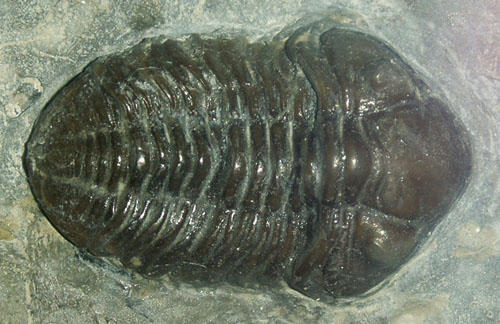
If you want to see the fossils in real life you can visit the Dudley Museum & Art Gallery, or the Lapworth Museum, or of course you could visit Wren's Nest itself. The picture is of the trilobite Calymene blumenbachii from Wren's Nest in the Dudley museum.

I have a set of photos taken at the Dudley museum on flickr here.

Tuesday, October 11, 2005

Morphbank


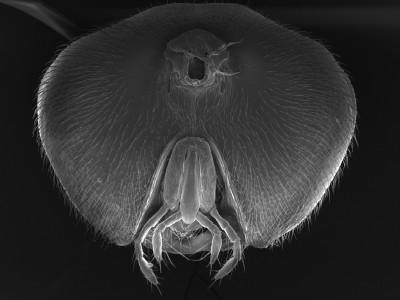
Above is an image from Morphbank a a cool new wesite I have just heard about via Eurekalert. It will apparently be an 'international Web database that contains thousands of high-resolution photographs and other images of plant and animal specimens.' The images here are all very high quality and it is possible to download vey high resolution versions which is nice, especially as there seem to be lots of nice SEMs, and i do like a nice SEM. The taxonomic coverage is limited at the moment (mainly to wasps) but it could be an amazing resource in the future.

The picture is the wasp Aylax papaveris and morphbank can be found at http://www.morphbank.com. Press release: http://www.eurekalert.org/pub_releases/2005-10/fsu-tso101105.php

Saturday, October 01, 2005

Flower Development

A nice Review of flower development has just been published in Nature Reviews Genetics:

Krizek, B.A. and Fletcher, J.C. (2005) Molecular mechanism of flower development: An armchair guide. Nat. Rev. Genet. 6, 688-698.

Abstract
An afternoon stroll through an English garden reveals the breathtaking beauty and enormous diversity of flowering plants. The extreme variation of flower morphologies, combined with the relative simplicity of floral structures and the wealth of floral mutants available, has made the flower an excellent model for studying developmental cell-fate specification, morphogenesis and tissue patterning. Recent molecular genetic studies have begun to reveal the transcriptional regulatory cascades that control early patterning events during flower formation, the dynamics of the gene-regulatory interactions, and the complex combinatorial mechanisms that create a distinct final floral architecture and form.

It is available to download from the Krizek lab homepage: http://www.biol.sc.edu/~krizek/0905NRG.pdf

Thursday, September 29, 2005

Worms!


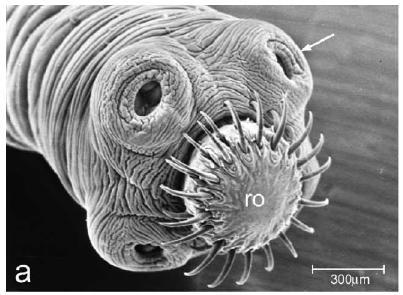
Above is a picture of the parasitic tapeworm Taenia crassiceps I thought i would post it becuase it is a neat picture. This parasite does look horrifying but there is some evidence to suggest that these and other parasites can be beneficial, manipulating the host immune response and preventing diseases such as asthma. Although a reduction in worm infection is probably not the only reason for the recent dramatic rise in asthma and other inflammatory diseases.

Microscopy and the helminth parasite http://dx.doi.org/10.1016/j.micron.2003.12.001 (source of image)

Parasite role reversal: worms on trial http://dx.doi.org/10.1016/j.pt.2005.02.002

Wheeze, allergic sensitization and geohelminth infection in Butajira, Ethiopia. doi:10.1111/j.1365-2222.2005.02181.x - evidence contra to the beneficial effect of worms?

Tuesday, September 27, 2005

The social bond between dogs and people

An interesting article on the history of the human relationship with dogs is soon going to be published in the Journal of Archaeological Science. Based on the earliest deliberate burials of humans and dogs it is estimated that this relationship was established by 14,000 years ago, although molecular techniques put this date much earlier. Humans certainly seem to have a strong bond with dogs and dogs have been shown to understand human cues such as gaze direction extremely well. This ability is better than that of the great apes or human reared wolves.

Even though this bond is strong it seems that this ability is quite easy to breed. A Russian experiment with silver foxes has managed to domesticate them in around 30 generations merely by selecting those that showed the least fear of humans. This has lead to a number of other interesting changes including an increase in: ‘floppy ears’ ‘curly tails’ a white star on the forehead and short rolled tails. These traits are also common in domesticated dogs. This shows how easy it is to domesticate an animal, although I wonder what would happen in a non canid?

It is also interesting to speculate why dogs were domesticated in the first place. I am inclined to think it was something like dogs being useful to track or herd animals. But the stability of this relationship for 14,000 years is probably in large part due to the close relationship human and dogs have developed, based on the ability of our two species to communicate in a unique way.
Burying key evidence: the social bond between dogs and people
Darcy F.
Morey. Journal of Archaeological Science.
http://dx.doi.org/10.1016/j.jas.2005.07.009

Abstract
People have been burying or otherwise ritually
disposing of dead dogs for a long time. They sometimes treat other animals in
such a fashion, but not nearly as often as dogs. This presentation documents the consistent and worldwide distribution of this practice over about the past 12,000e14,000 years. Such practices directly reflect the domestic relationship between people and dogs, and speak rather directly to the timing of canid domestication. In doing so, they contradict recent genetics-based inferences, thus calling into question the legitimacy of focusing mostly on genetic factors
as opposed to other factors. This discussion seeks to work towards a sound framework for analyzing and thus understanding the social compatibility between people and dogs. That compatibility is directly signified by the burial of dogs, with people often responding to the deaths of individual dogs much as they usually respond to the death of a family member. Moreover, that special social relationship continues, as illustrated clearly by the establishment, maintenance, and ongoing use of several modern dog cemeteries, in different countries of the world.

Early Canid Domestication: The Farm-Fox Experiment
http://www.floridalupine.org/publications/PDF/trut-fox-study.pdf

Dogs respond appropriately to cues of humans' attentional focus
http://hal.psych.uw.edu.pl/2004zalaczniki/Viranyi%20i%20in%202004.pdf

Saturday, September 24, 2005

Transitional Dinosaur - Bird Eggs

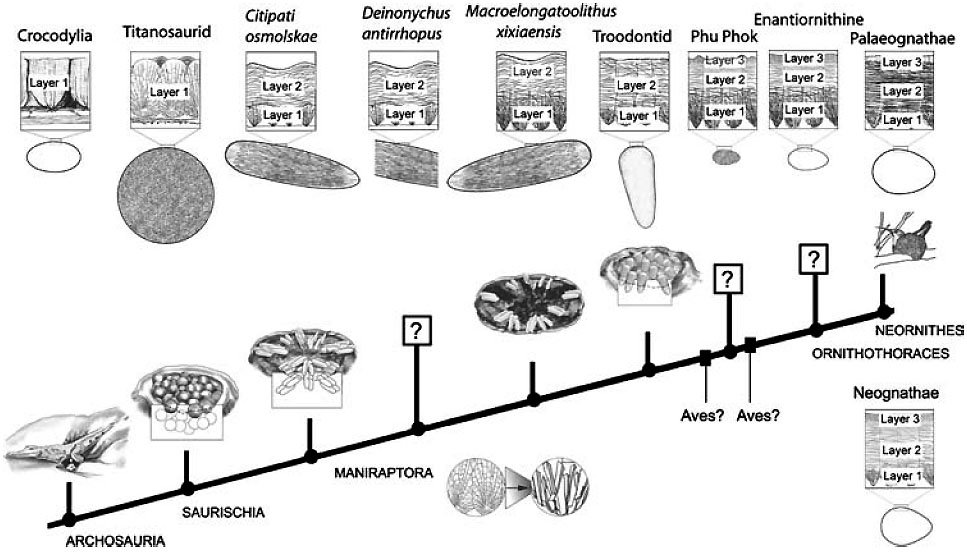
Evolutionary trends in eggs and egg-laying from basal archosaurs to modern birds

An interesting new article is available from Naturwissenschaften reporting the discovery of eggs with dinosaur-like and bird-like characteristics. This is of course exactly what you would expect to find if birds had evolved from dinosaurs.


Minute theropod eggs and embryo from the Lower Cretaceous of Thailand and the dinosaur-bird transition

Eric Buffetaut, Gerald Grellet-Tinner, Varavudh Suteethorn, Gilles Cuny, Haiyan Tong, Adrijan Košir, Lionel Cavin, Suwanna Chitsing, Peter J. Griffiths, Jérôme Tabouelle1 and Jean Le Loeuff.

Abstract

We report on very small fossil eggs from the Lower Cretaceous of Thailand, one of them containing a theropod embryo, which display a remarkable mosaic of characters. While the surficial ornamentation is typical of non-avian saurischian dinosaurs, the three-layered prismatic structure of the eggshell is currently known only in extant and fossil eggs associated with birds. These eggs, about the size of a goldfinch's, mirror at the reproductive level the retention of small body size that was paramount in the transition from non-avian theropods to birds. The egg-layer may have been a small feathered theropod similar to those recently found in China.


Link - journal website

Free full text: PDF